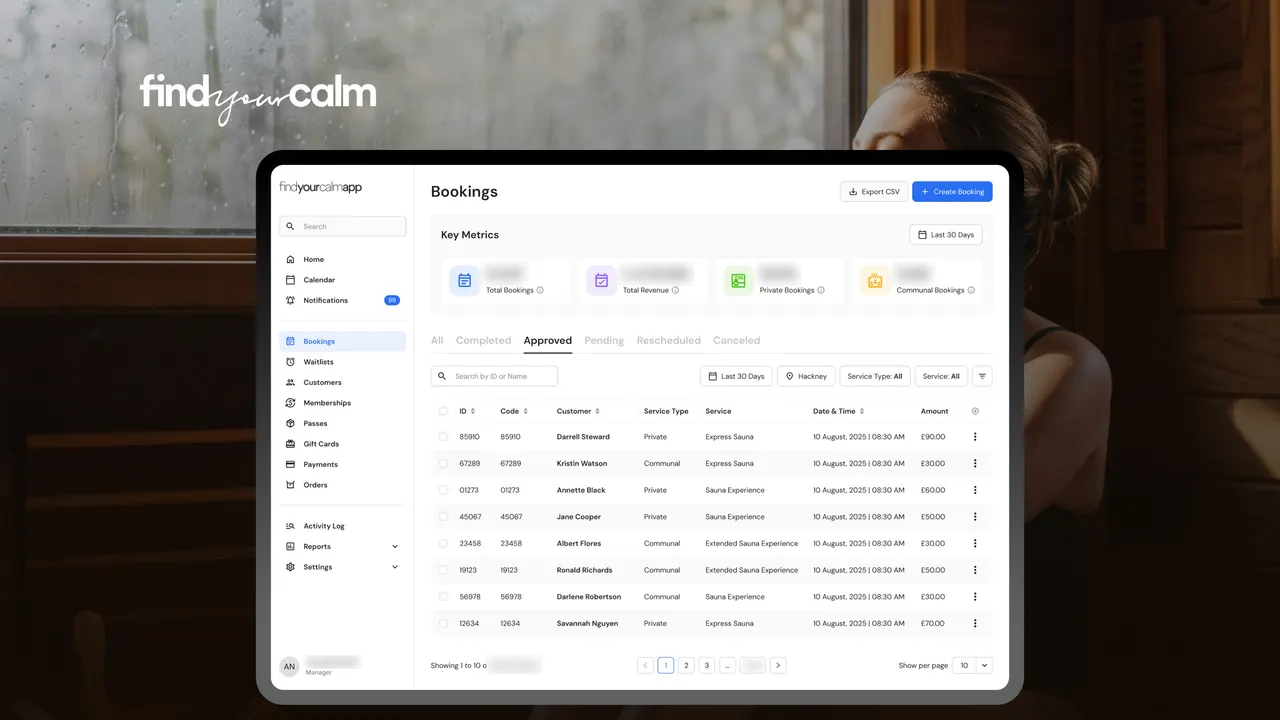
How custom booking software for Rooftop Saunas, a London sauna operator, became Find Your Calm, a UK wellness marketplace and booking platform.
Rooftop Saunas runs private sauna cabins across more than one London location, with every slot priced separately and every location on its own schedule. Their booking software was costing them money, so they asked Boomdevs for custom software built around how they work, and sellable to other businesses one day.
It had to plug into their existing WordPress site, so customers kept booking where they always had, and bookings couldn't stop during the switch. In June 2025 I took full ownership as Product Manager.
Today Find Your Calm is one platform with five parts: a business dashboard, a public web app and marketplace, an operator-branded customer web portal, an operator-branded customer mobile app, and a future Find Your Calm customer app. The Rooftop Saunas app is one operator's version of the operator-branded app. The platform focuses on one market (hot and cold wellness) and grows the number of operators there first.
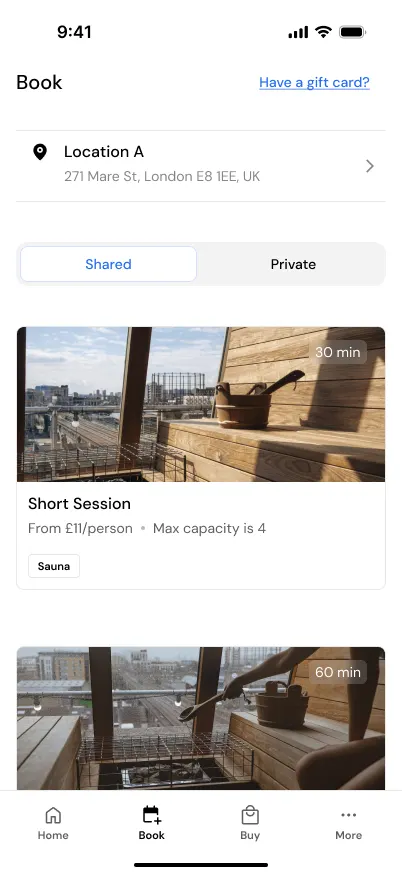
After launch we also tracked booking completion, how often bookings included a membership or pack, and operator count.
Research and wireframing came first: every booking scenario was mapped before anything was designed, with wireframes in Miro and Figma. From there I designed the web app for customers booking a slot and for staff managing the day.
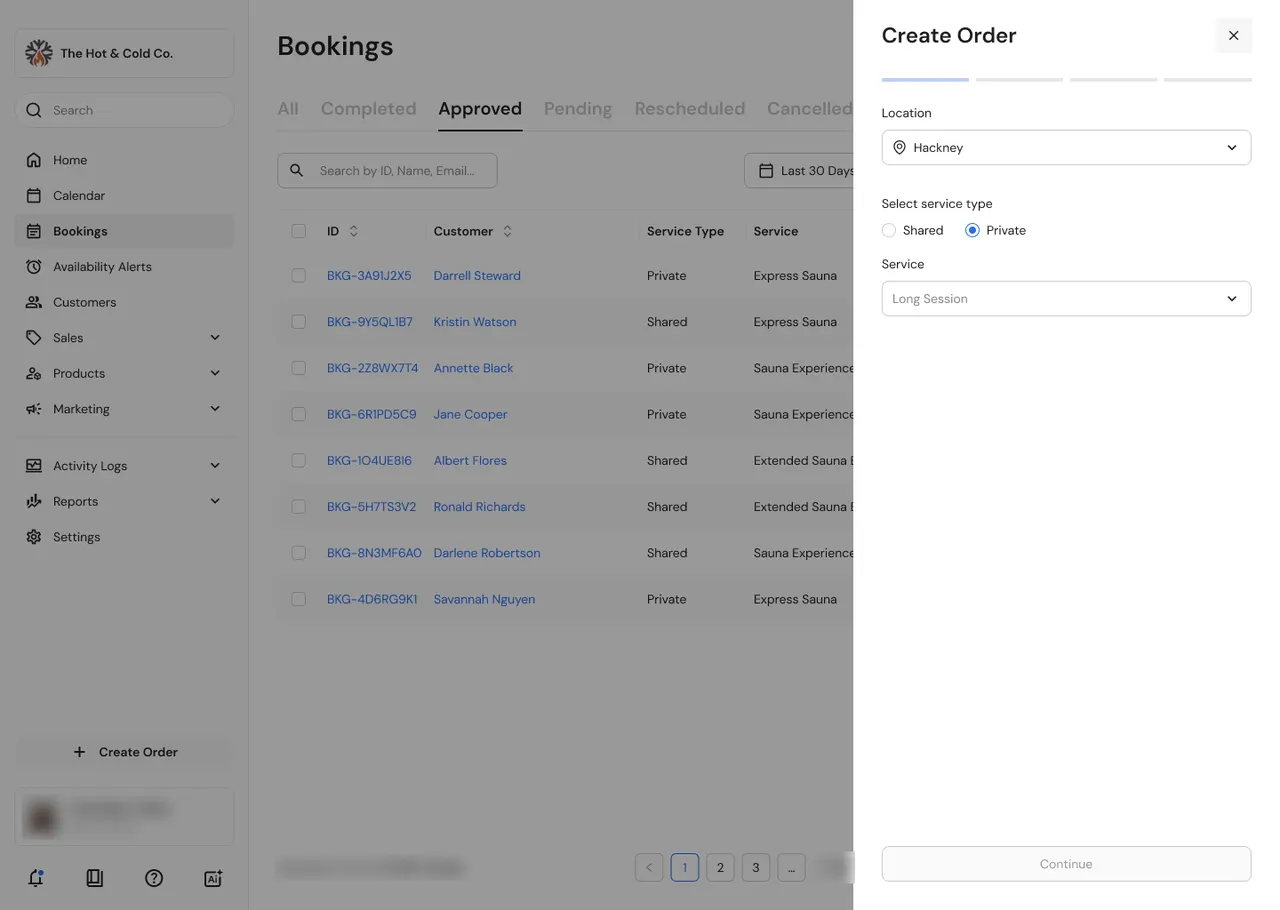
We met the client every week and researched each sprint's requirements before starting it, so nothing had to be rebuilt late.
To hold the August date, I cut by one rule: anything that needed more work to share across all operators moved to a later release, rather than being squeezed in or built as a one-off for a single operator. A few other features moved too, to make room for structured location data, which would have been far harder to add once many operators were live. What stayed was everything Rooftop Saunas needed to switch over without a gap in bookings.
What shipped:
Brings new operators in, so the marketplace grows before it earns.
Priced by the revenue each operator manages; the number of users and locations doesn't change the price. No commission on transactions: operators take payments through their own payment accounts.
The old system took 9 steps to make a booking and asked for too much information along the way. I identified the problem, aligned with the client on a simpler flow, and designed a 4-step booking flow, which he approved.
Before switching over, every booking path was tested and all data was moved from the old system, so bookings kept flowing.
After launch, I led the work to improve the booking journey end to end, using where customers dropped out, behaviour data from Microsoft Clarity, Mixpanel and GA4, session feedback and common support questions to lift completion. I also defined the digital onboarding journey for new operators.
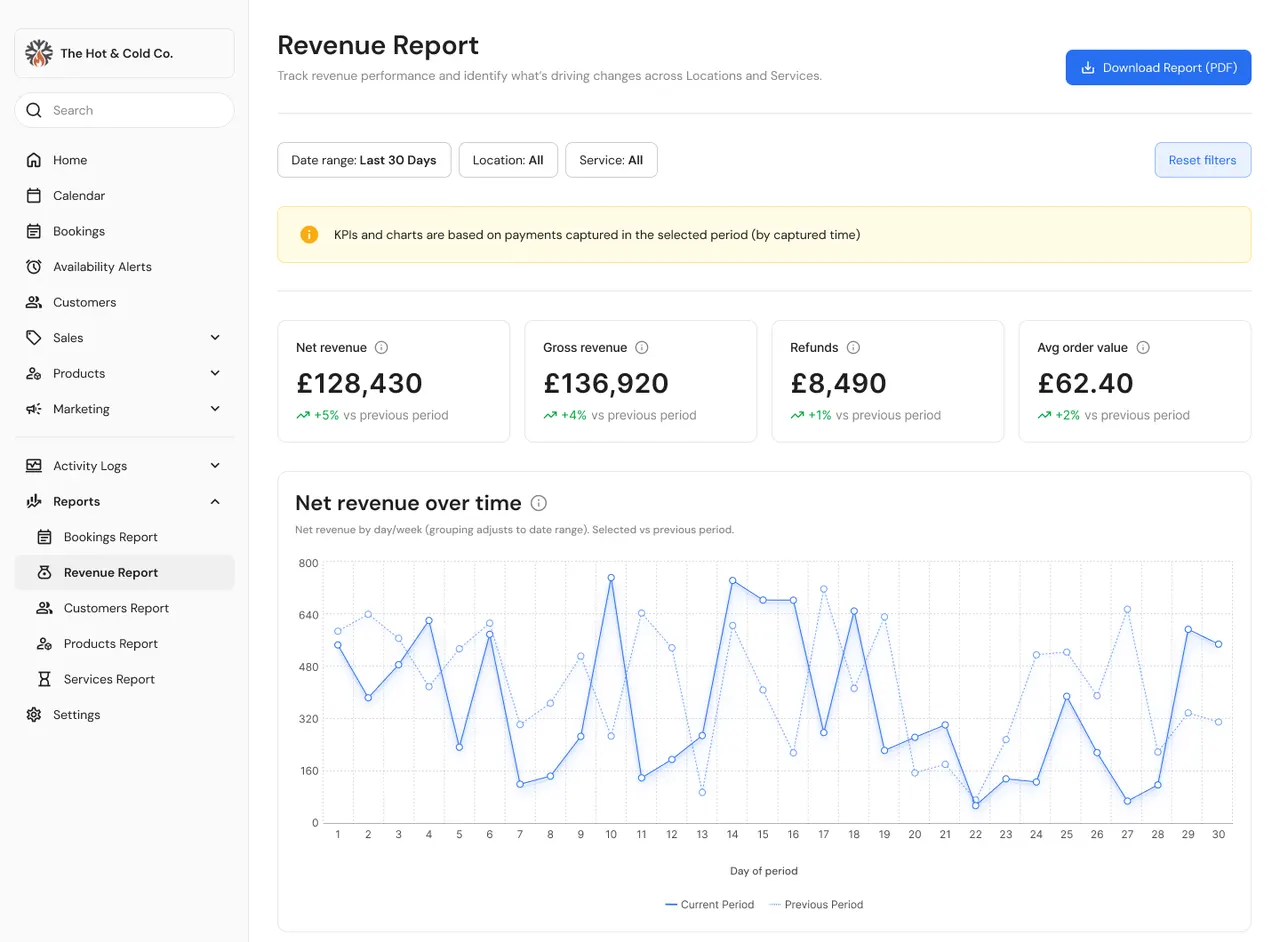
I created the product doctrine for Find Your Calm: the roadmap and vision, a map of 12 product areas across the five parts, the pricing policy, and a decision log that is only ever added to. It's kept alongside the code in GitHub and the designs in Figma, and the client is the final decision-maker.
Booking completion is shown as a relative change: the underlying data, like the rest of the platform analytics, is confidential and reviewed with the client in working sessions rather than published here.
“Boomdevs delivered exactly what we needed right on time. The new booking system has made our day-to-day smoother, and their team was easy to work with the whole way through.”
Agree how booking completion is measured before the switch-over. The delivery metrics were set upfront, and we tracked the old system from the start and the new platform from launch with Microsoft Clarity, Mixpanel and GA4. But booking completion only became a tracked metric after launch. Agreeing it and its measurement window with the client before the switch-over would have made the before-and-after comparison cleaner.
Put the operator side in front of real operators earlier. Testing operator setup and onboarding with real operators sooner would have shown us sooner which features every operator should share and which each should set up.