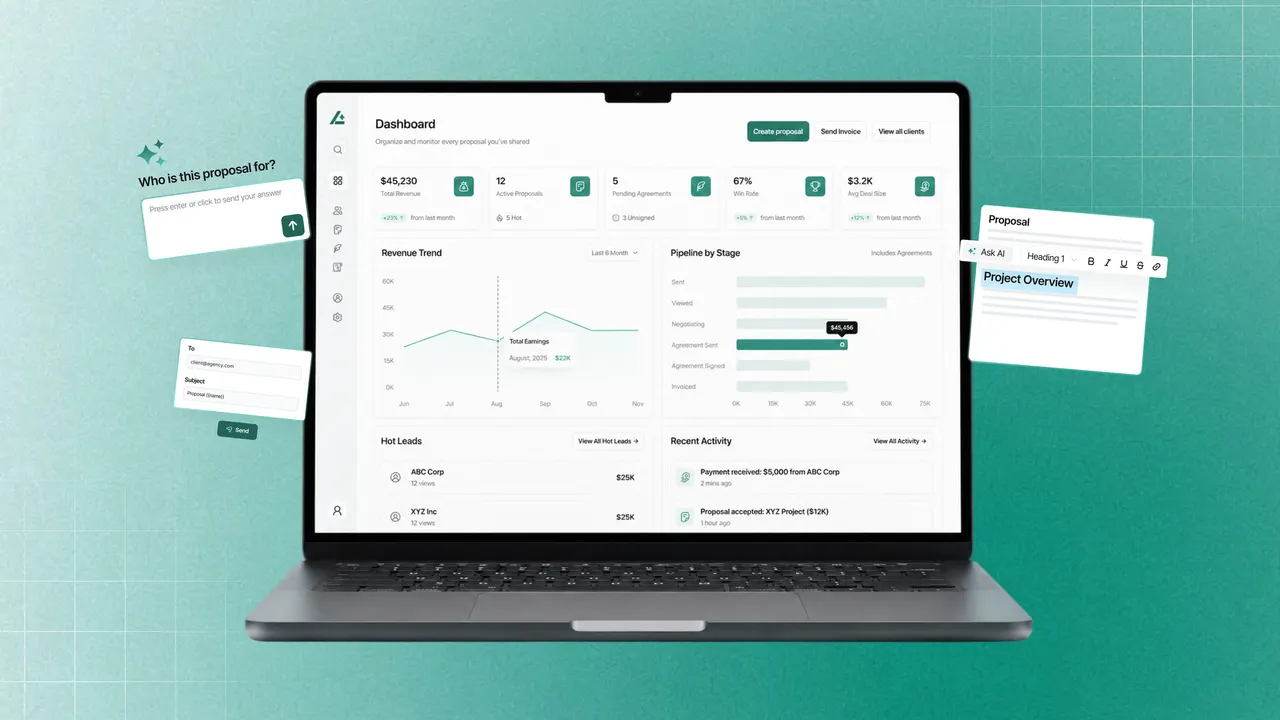
LeanDeck turns a proposal that took agencies 6–10 hours by hand into an AI-drafted, editable document, then into an agreement and an invoice.
For design and dev agencies, a proposal takes 6–10 hours, mostly written by hand from scratch. LeanDeck, built for a US client and only for design and dev businesses, drafts it with AI and carries it through to an agreement and an invoice.
I owned the product end to end, including the billing and document journey, and decided where AI should act. I also created the pitch deck and the product positioning.
We didn't set formal metrics, but we built against three clear goals:
The core flow has four steps: choose a document, answer smart questions, review and refine, deliver. Two problems were harder than the rest: getting accurate, consistent AI output every time, and making the AI's cost and timeline estimates defensible. I wrote and tested the prompts, worked on how the AI finds the right information, and defined the criteria for evaluating AI output. I designed the AI-assisted proposal, agreement and invoicing flows on a scalable Ant Design component library.
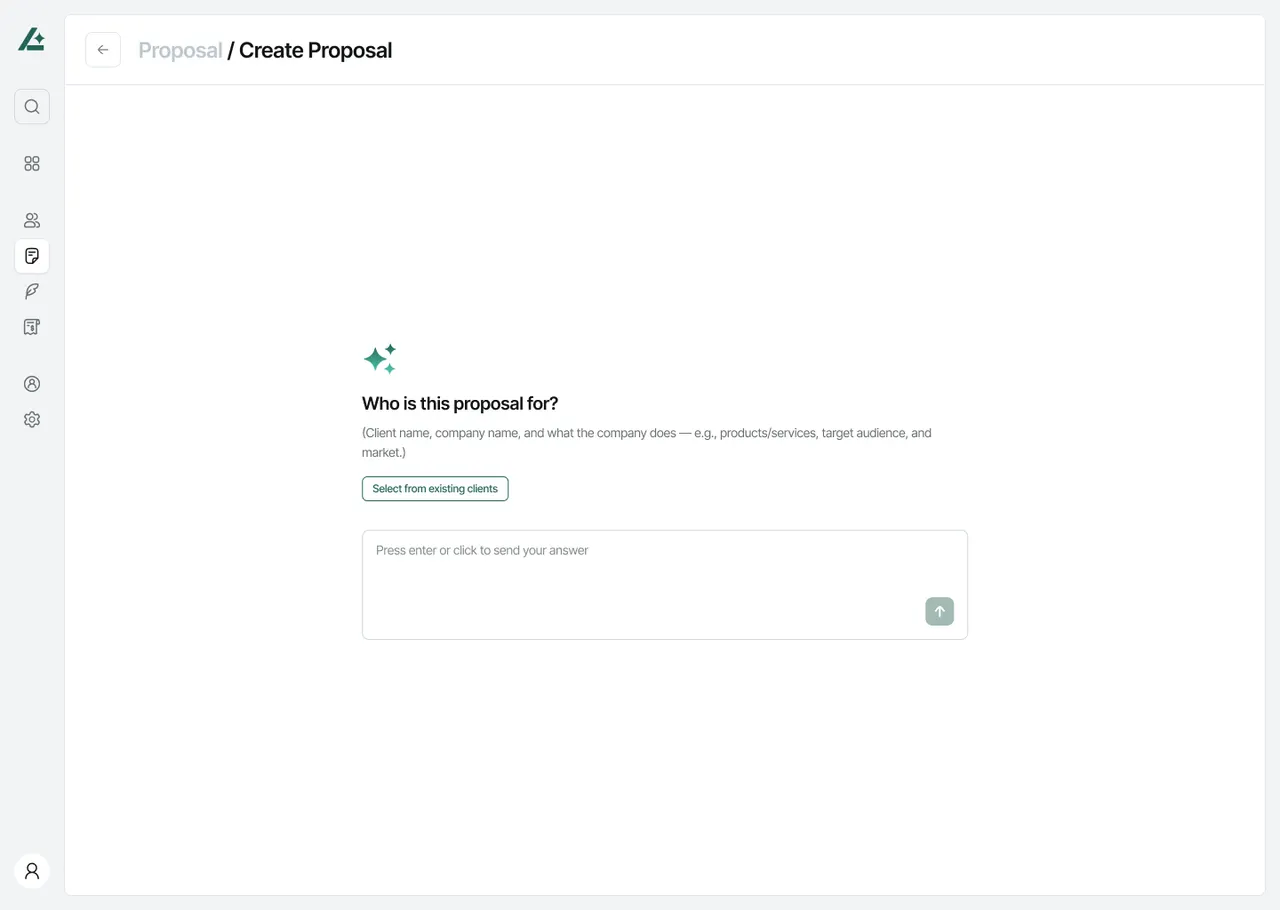
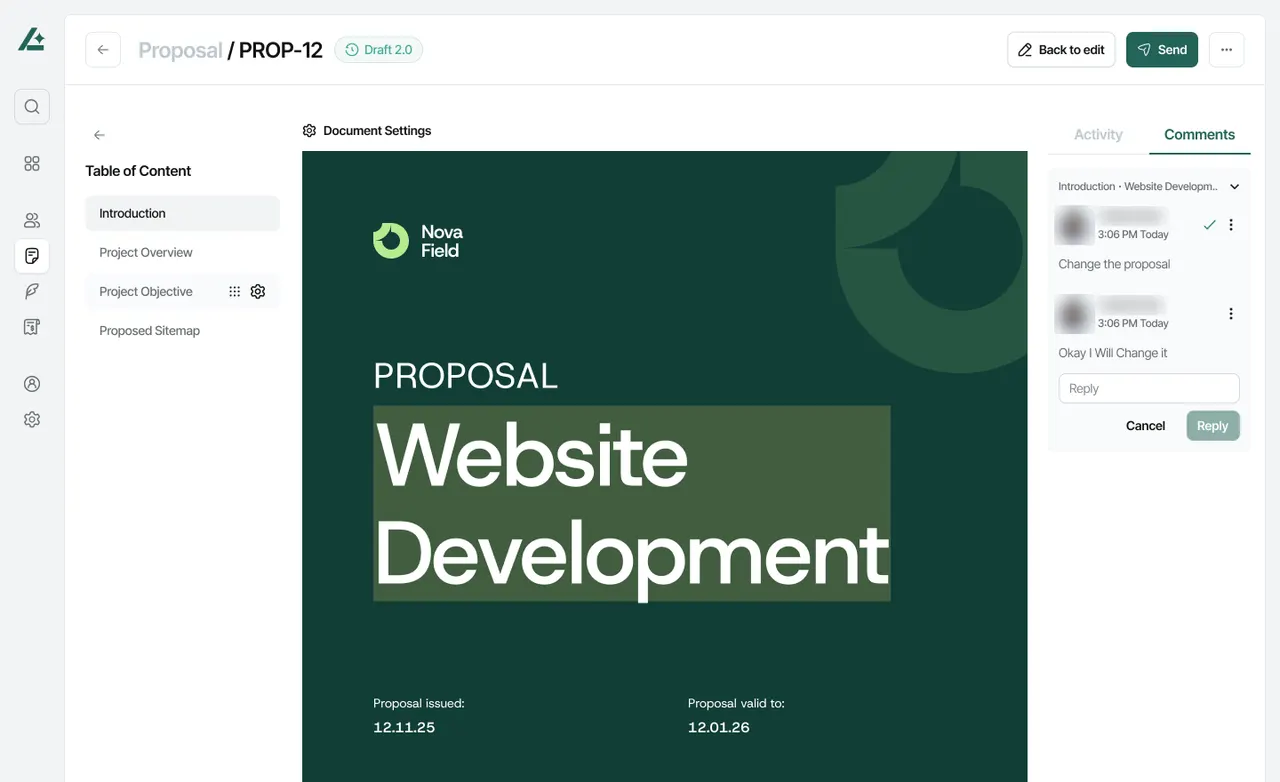
To hit a beta in eight weeks, I kept invoicing rule-based instead of AI-generated (the same line as the decision above), so there was one less place a plausible-but-wrong document could come from. I also moved milestone billing to Phase 2.
What shipped:
Built on Django and FastAPI, GPT-5.1 and Next.js. We kicked off on 9 November 2025 and launched the beta in early January 2026 with 6 agencies. Alongside the build I created the pitch deck and the product positioning. Phase 2 (milestone billing) is in progress.
Customer count as published on leandeck.ai.
I'd build a fixed set of test proposals in week one and score every prompt change against it, instead of judging AI output case by case.