
"We can't build the AI part yet, we don't have enough data." I hear this from founders often, and for most first releases it isn't true.
Most AI MVPs don't need training data of their own. They need a narrow job, a strong general model, 20 good examples, structured output and a review step that collects corrections. Those corrections become your data. You need data first only when the AI has to predict, rank or score something against your own history.
Here's where the first examples come from, why the review step matters so much, and how to tell which kind of product you're building.
Why is "we need data first" usually wrong for an MVP?
Because today's general models already know how to write, summarise, sort and extract. What they don't know is your job: what a good answer looks like for your users, in your format, with your rules.
You teach them that with instructions and examples. You don't need thousands of records to do it. You need a clear task and a handful of examples of it done well.
The products I've led show this. LeanDeck drafts proposals and agreements for design and development agencies; it reached beta with 6 agencies in 8 weeks. SportsOnTV writes sports summaries across 32 sports; it went live in 5 weeks. Both started with a narrow job and a clear idea of what good output looked like.
Where do your first examples come from?
From the work people already do, and sometimes from doing it yourself.
- User interviews. On LeanDeck, the interviews I ran showed that a proposal took agencies 6 to 10 hours, mostly written by hand from scratch. They also told us what a good proposal needed to contain.
- Past documents. Proposals, reports, emails or tickets your users have already written. Ask for them and remove anything personal.
- Work done by hand. If you can, do the job manually for a few real customers first. Every input and every answer you produce is an example.
- A concierge period. Launch with a person doing the job behind the scenes, and let the AI take over the parts it handles well. You learn the job and collect examples at the same time.
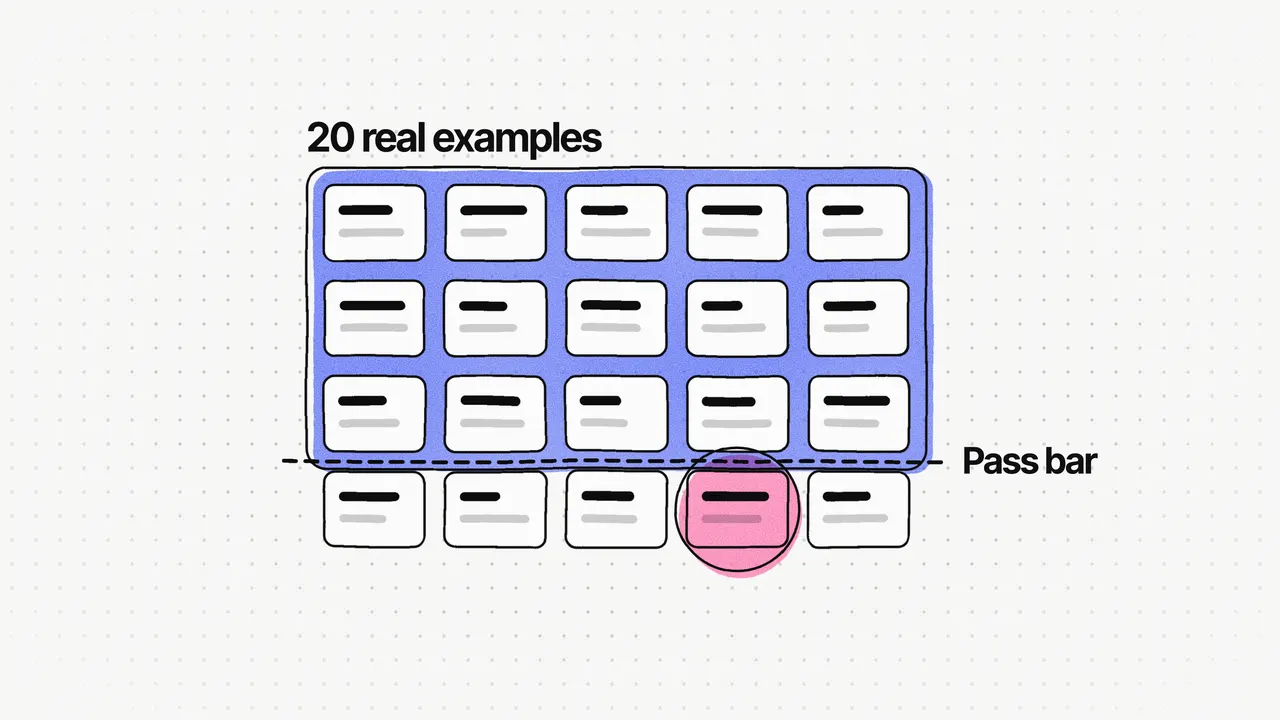
Twenty is enough to start. I explain how to choose them and score the AI against them in Test your AI feature with 20 real examples.
Should you fine‑tune a model or start with prompts and examples?
Start with prompts and examples. They're faster to change, cheaper to run and easier to test: you change a line, re-run your 20 examples and see what happened.
Make the output structured too. LeanDeck returns proposals as editable sections instead of one block of text, which made each section easier to check and correct. Structure is also what makes corrections useful later: you know exactly which part a person changed.
Fine-tuning can come later, once you have real inputs and corrected outputs and the prompts have stopped improving things. For most first releases, it's too early to know whether you'll need it.
How does a review step turn into a data engine?
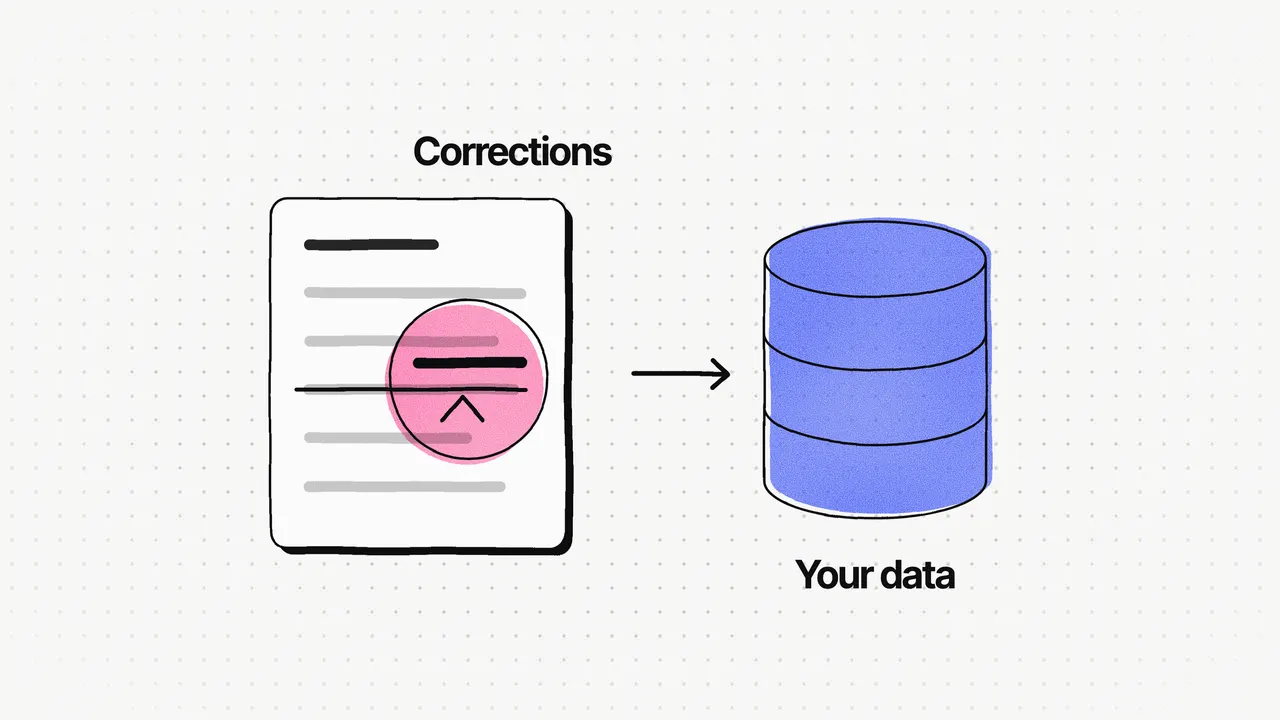
Every time a person corrects the AI, you learn something. If you save those corrections, they become the data you didn't have at the start.
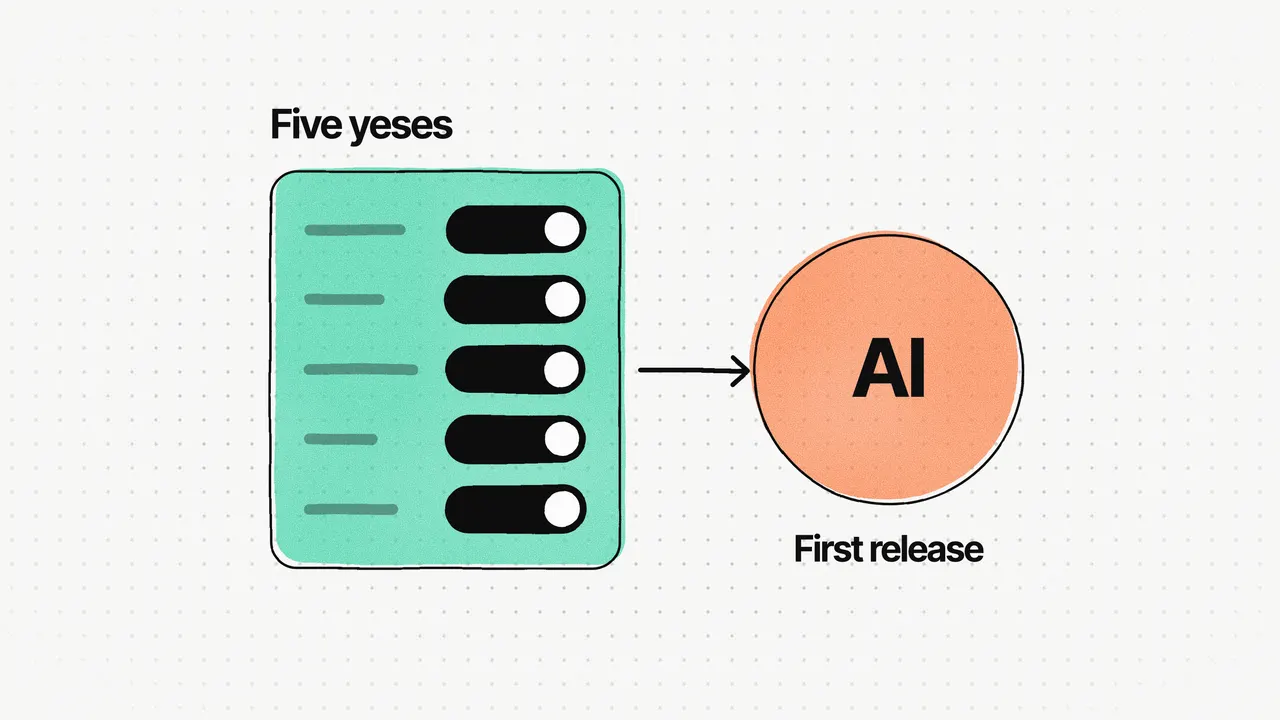
SportsOnTV is the clearest example I have. AI sports summaries arrived in a review panel first, and at launch the client's team reviewed and published each one. After launch, the client said the first summaries weren't what he was looking for. I reviewed the AI's guidelines and instructions and shared what needed to change, the team made the changes, and the client approved the new output. Once the AI was tuned, his team told us they no longer needed to check each summary.
That loop is the data engine. To get the most from it, save these for every corrected output:
| What to save | Why |
|---|---|
| The input | So you can re-run it after any change |
| The AI's output | To see what it got wrong |
| The corrected version | To learn what good looks like |
| A short reason, when there is one | To find patterns in what goes wrong |
What about privacy?
Real examples often contain real people's details, so handle them with care from day one:
- Ask first. Get users' consent before their documents become test examples.
- Remove what you don't need. Strip names, emails, prices and anything identifying before examples go into prompts or test sets.
- Send the model only what the task needs. If the job doesn't need personal data, don't include it.
- Check your provider's terms on how they use and store what you send.
When do you really need data first?
When the AI's job is to predict, rank or score something against your own history. For example, guessing which leads are likely to buy, or ranking items by what similar customers chose. Without that history, there's no pattern to learn, however good the model is.
If that's your product, the first release may need to collect the history before the AI can use it, often with simple rules doing the job in the meantime. Varsee's lesson applies here too: test the AI before every screen. If the test shows the AI can't do the job yet, you've learned it before building anything around it.
If you're unsure whether your product needs AI at all yet, Should your MVP include AI? has the five questions I use, and How to build an AI MVP covers the build itself.
If you have a product and an AI idea but aren't sure the data is there, my AI feature scoping and evaluation work answers that first: where the AI acts, a scored test set, the review step and the cost per task.
Frequently asked questions
Do you need training data to build an AI product?
Usually not for a first release. Most AI MVPs use a strong general model with clear instructions and a set of good examples. Your own data builds up later, from the corrections people make to the AI's output.
How many examples do you need to start an AI MVP?
I start with 20 real examples and a written description of a good answer for each. That's enough to test whether the AI can do the job before anything is built.
When should you fine-tune a model?
After launch, when you have a good number of real inputs and corrected outputs, and prompts and examples have stopped improving the results. For most first releases, it's too early.
When do you need your own data before building?
When the AI has to predict, rank or score something against your own history, such as which leads are likely to buy. Without that history, there's nothing for it to learn the pattern from.