Building AI products people trust
To build an AI product people trust, give the AI one narrow job that saves real time and that a person can check quickly, and keep anything that moves money on fixed rules. Then test it against real examples before you build screens, review the first outputs until they earn trust, and price it so your heaviest users still leave you a margin.
That's what I've learned from leading three products where AI does real work. LeanDeck, an AI proposal, agreement and invoicing tool for design and development agencies, reached beta with 6 agencies in 8 weeks. A proposal took agencies 6 to 10 hours by hand; in LeanDeck, a proposal or agreement takes about 5 minutes. SportsOnTV, a 24/7 sports channel and news hub covering 32 sports, went live in 5 weeks with AI-written sports summaries that the client's team reviewed in a review panel at launch. Varsee, an AI live-shopping platform, has a full prototype of all five parts of the product, made in 6 weeks, with the AI working beside the store's own salespeople.
In all three, choosing the model was the easy part. The decisions that mattered were whether AI belonged in the first release at all, where it acts, what it gives back, how we'd know it was good enough, who checks it and what each task costs.
This guide puts those decisions in order. It starts with a five-question test for whether your MVP should include AI, then one product in depth: where the AI acts in LeanDeck, and where it doesn't. Next comes the build across all three products, followed by the two questions founders ask me most: how to test an AI feature before building it, and what to do when you don't have much data. Then the cost of each AI task and how it shapes your price. It ends with the screens, and the patterns that let people check and correct what the AI gives them.
Every example comes from a product I led. Where a post uses a number from outside my own work, such as a model's price, it names the source and the date I checked it.
7 posts, in reading order
-
Step 1 of 7
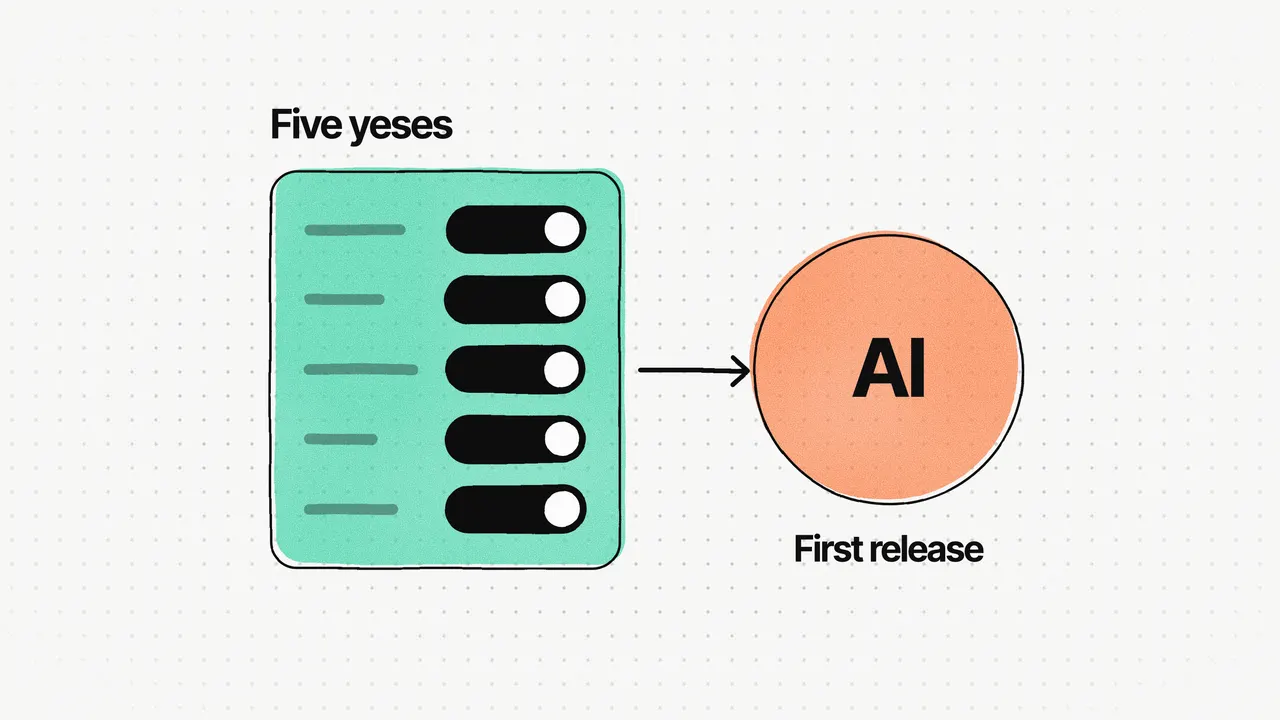
Start with the decision itself. Five yes-or-no questions say whether AI belongs in your first release, with three products where it did and two where fixed rules were the right tool.
 No. 02215 Nov 2026
Should your MVP include AI? A 5‑question test
The five yes-or-no questions I ask before AI goes into a first release, with three products where it belonged and two where fixed rules were the right tool.
AI · 7 min -
Step 2 of 7
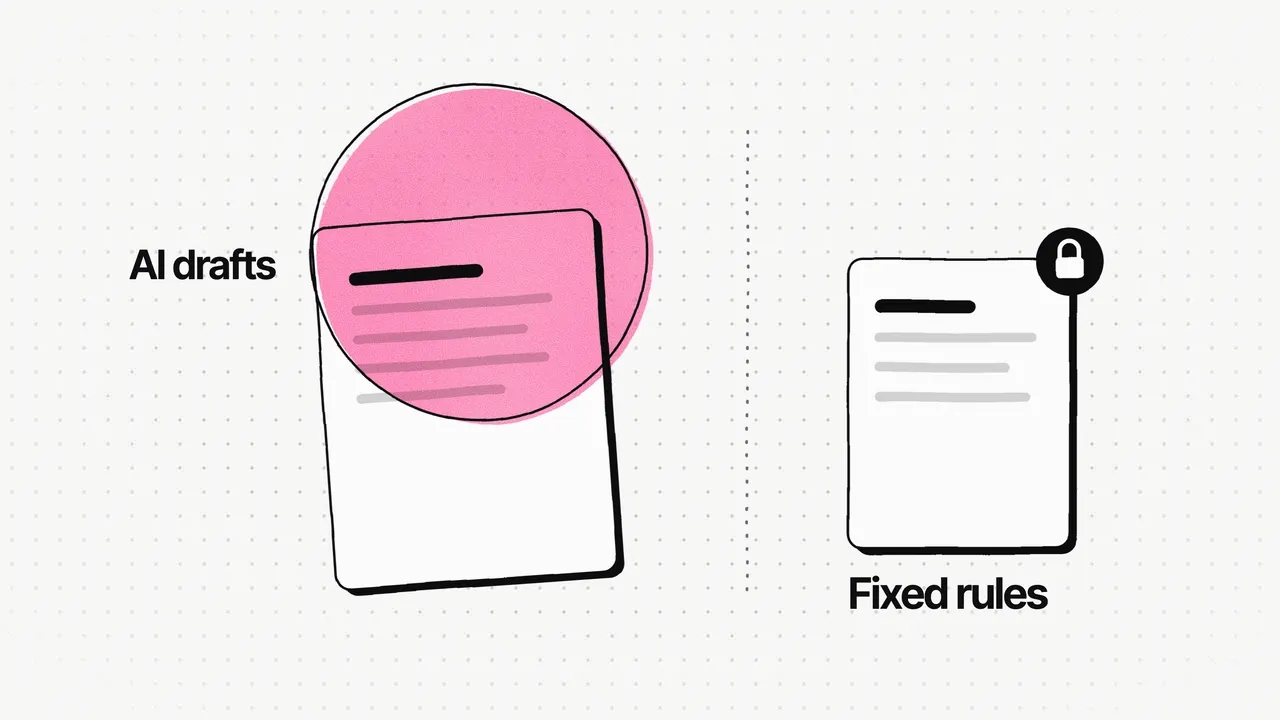
Then one product in depth. In LeanDeck the AI drafts proposals and agreements, and invoicing stays on fixed rules, because a plausible-but-wrong invoice is worse than a slower one.
 No. 00130 Oct 2026
Where the AI acts in LeanDeck, and where it doesn't
AI writes the first draft of a proposal in LeanDeck. It never writes the invoice. Here's where we drew that line, and why.
AI · 3 min -
Step 3 of 7
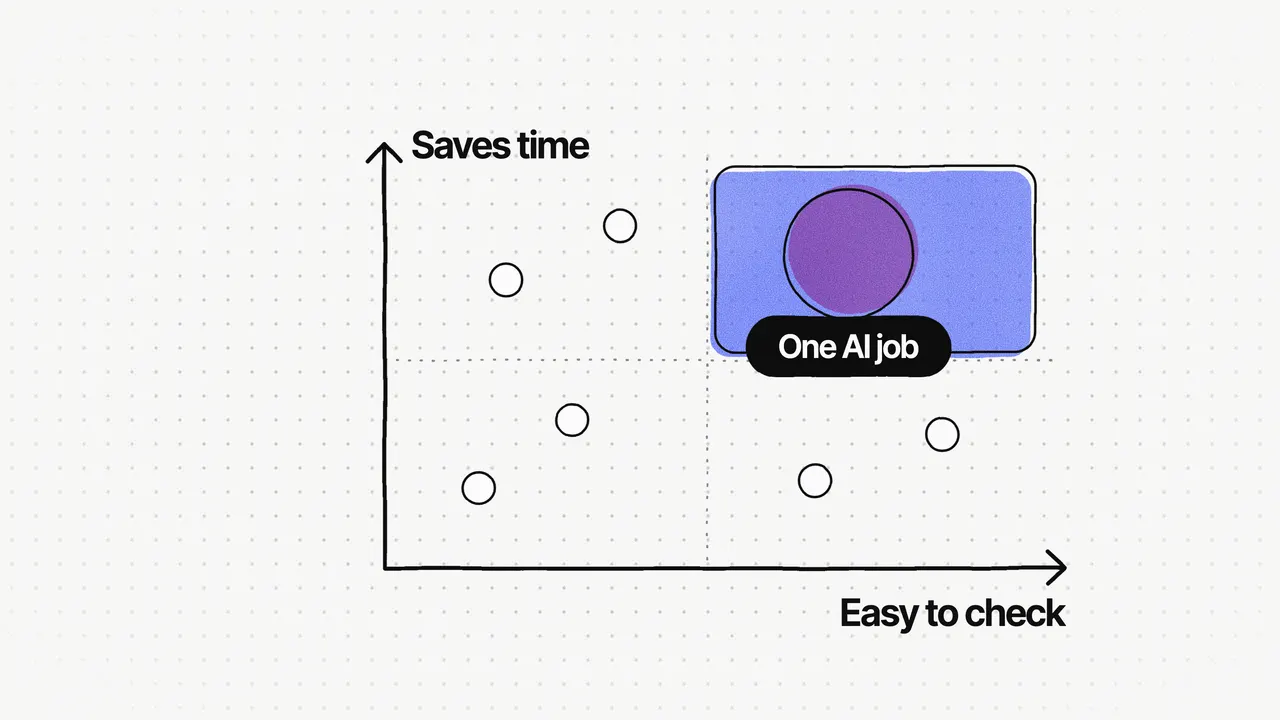
The build itself, across three AI products: where the AI acts, what it gives back, how you know it's good enough and who checks it before customers see it.
 No. 02115 Nov 2026
How to build an AI MVP: what I learned shipping three AI products
Where the AI should act, what it should return, how to test it and who checks it, from LeanDeck, SportsOnTV and Varsee.
AI · 7 min -
Step 4 of 7
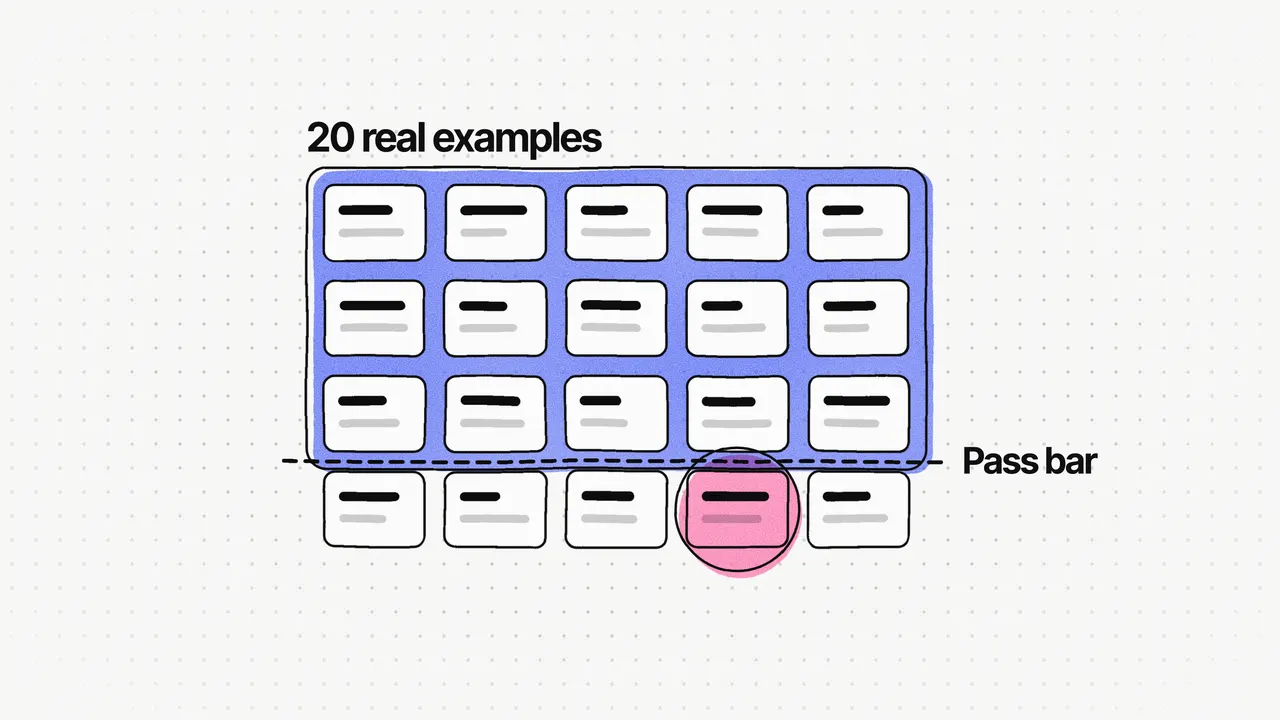
How to know the AI is good enough before you build any screens: 20 real examples, a written good answer for each, and a pass bar you set before you look.
 No. 02315 Nov 2026
Test your AI feature with 20 real examples before you build
A demo shows one good answer. Twenty real examples, scored by hand, show whether the AI can do the job. This is the method I use before any screens get built.
AI · 7 min -
Step 5 of 7
If you're worried you don't have the data. Most AI MVPs start with a narrow job, good examples and a review step that turns every correction into data.
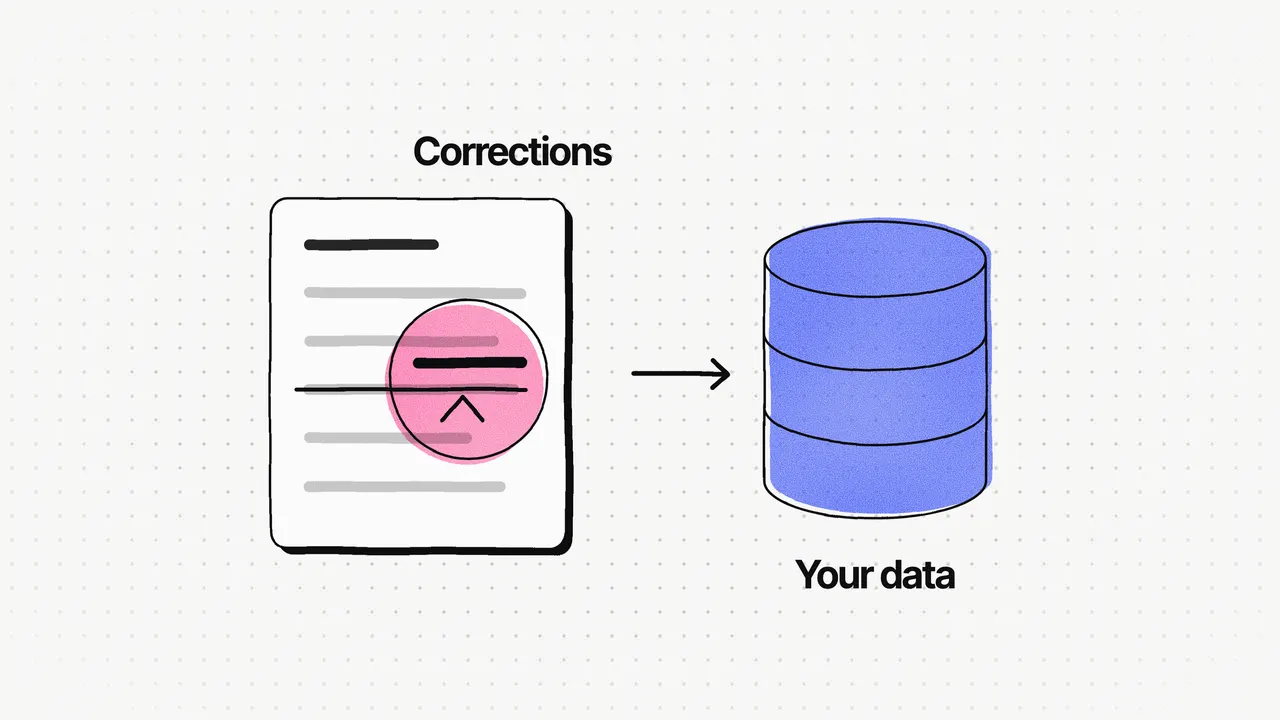 No. 02515 Nov 2026
Not enough data for your AI product? What to do before you build
Most AI MVPs don't need training data of their own. They need a narrow job, good examples and a review step that turns every correction into data you can use.
AI · 6 min -
Step 6 of 7
Before you set a price. What one finished AI task costs in model fees, retries, review time and storage, and why you price for your heaviest users.
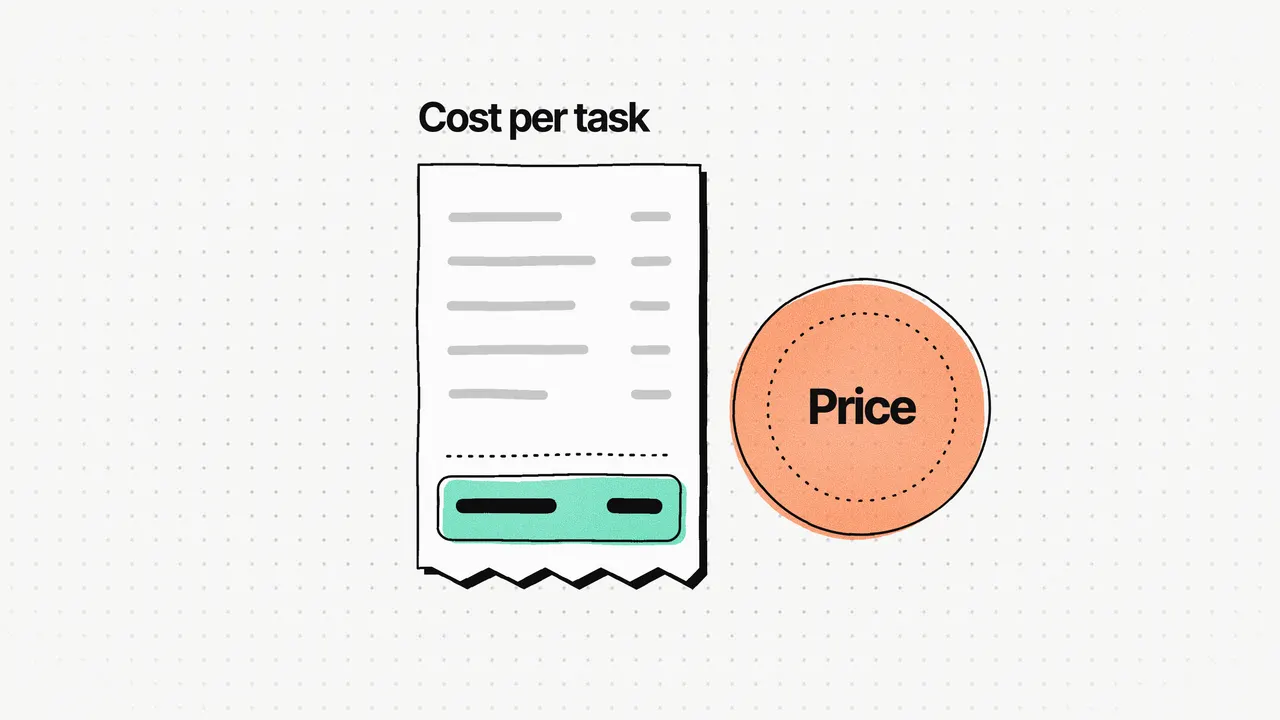 No. 02415 Nov 2026
AI cost per task: the number to know before you set a price
What one finished AI task really costs you, a simple formula to work it out, and how that number should shape your price, your limits and your heaviest users.
AI · 7 min -
Step 7 of 7
Finally, the screens. Seven patterns from LeanDeck that let people check, edit and trust what the AI gives them.
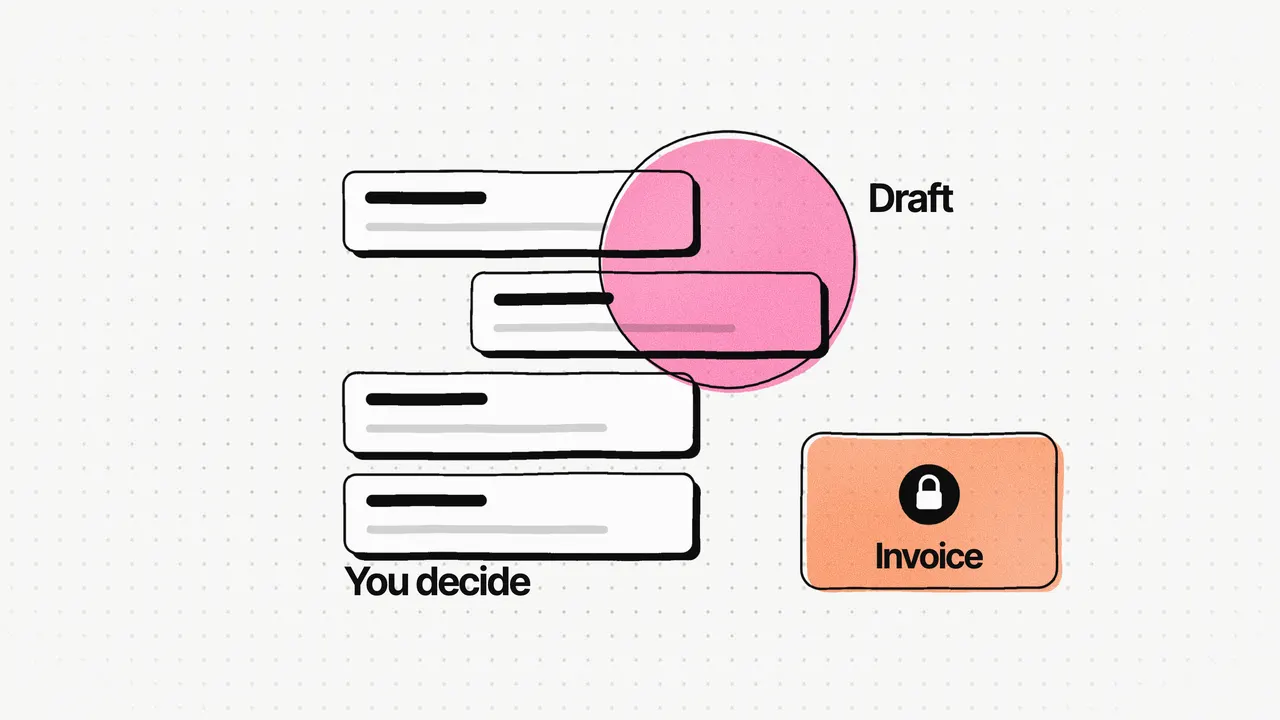 No. 01530 Oct 2026
Designing AI features people trust: 7 UX patterns from shipping LeanDeck
Seven patterns from designing LeanDeck's AI proposal tool, where a proposal or agreement now takes about 5 minutes, and what each one cost.
AI · 6 min
The products behind it
Frequently asked questions
How do you build an AI product people trust?
Give the AI one narrow job a person can check quickly, keep anything that moves money on fixed rules, and return structured output people can edit. Test it against real examples before you build screens, and review the first outputs until they earn trust.
Should an MVP include AI?
Only if it saves real time on a frequent task, a person can check the output quickly, a wrong answer is cheap to fix, you have real examples to test it on, and the cost per task fits your price. Otherwise, launch without it and add it later.
How do you test an AI feature before launch?
Collect 20 real inputs, write what a good answer looks like for each, and score every output as pass, fix or fail against a bar you set first. Re-run the same set after every prompt or model change.
What should stay on fixed rules in an AI product?
Anything with one exact answer, and above all anything that moves money. In LeanDeck, the AI drafts proposals and agreements, and invoicing follows fixed rules.
Building a product?
I help founders and teams decide what to build, design it, and ship it. Tell me about your project.