Design and dev agencies spend 6–10 hours writing each proposal, mostly by hand and from scratch. LeanDeck turns that into an AI-drafted proposal, then carries it into an agreement and an invoice. In LeanDeck today, a proposal or agreement takes about 5 minutes.
The hard part wasn't getting AI to write. It was deciding where it should write at all. Proposals, agreements and invoices look like the same kind of document, but they aren't. An agreement and an invoice are financially binding. A proposal is a pitch that a person reads before anything happens.
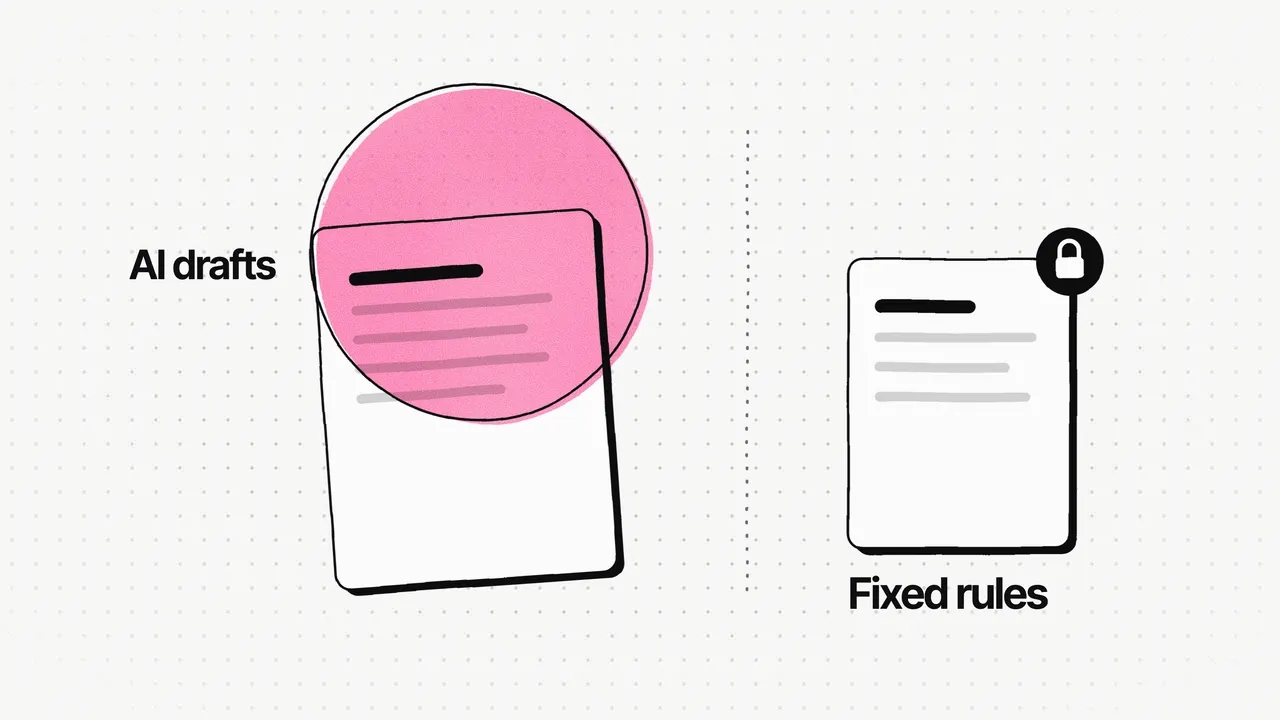
So the line we drew was simple: AI drafts where a person reviews the result before it matters. Fixed rules run where a wrong answer costs money.
1. AI writes sections you can edit one by one
The first version of any AI writing tool is a prompt box and a wall of generated text. That's hard to check and hard to fix. If one paragraph is wrong, you rewrite the whole thing.
In LeanDeck, the AI returns a proposal as structured sections, and each section can be edited on its own, down to a single sentence, with AI help built into the editor.
It cost us something: more prompt and evaluation work, slower generation, and less freedom for the AI, which has to fit a set structure. It was worth it, because agencies can edit, reorder, restyle and price sections. A block of text is something they'd have to rewrite.
2. The AI asks before it writes
A blank prompt box assumes people know how to write prompts. Most don't, and they shouldn't have to.
Before it drafts anything, LeanDeck asks a few short questions: who the proposal is for, what the project is, and which services it covers, with suggested answers you can tap. Agencies can start from a template for a service they sell often, or from scratch. Both paths go through the same questions, so the AI gets the same structured input every time.
3. Invoices follow fixed rules
Generative AI could have drafted every document, including invoices. We chose not to.
The reasoning: a plausible-but-wrong invoice is a worse failure than a slower one. So AI drafts proposals and agreements, and invoicing stays rule-based. Even after launch, when we added a way to paste a client conversation and get all three documents drafted from it, invoice amounts still come from the work and prices agreed in the proposal.
That meant less automation in the one place where it would have been easiest to add. I'd make the same call again.
4. People can override anything
Financially binding documents need to be reviewable. So users can accept, edit or override any AI output without losing their place. The product says it plainly: "The AI assists; you decide."
What I'd do differently
I'd build the AI test set on day one. A fixed set of test proposals, scored the same way after every prompt change, beats judging AI output case by case.