
Should your MVP include AI? Add it to the first release only if you can answer yes to all five of these questions:
- Does it save real time on a task people do often?
- Can a person check the output quickly?
- Is a wrong answer cheap to fix?
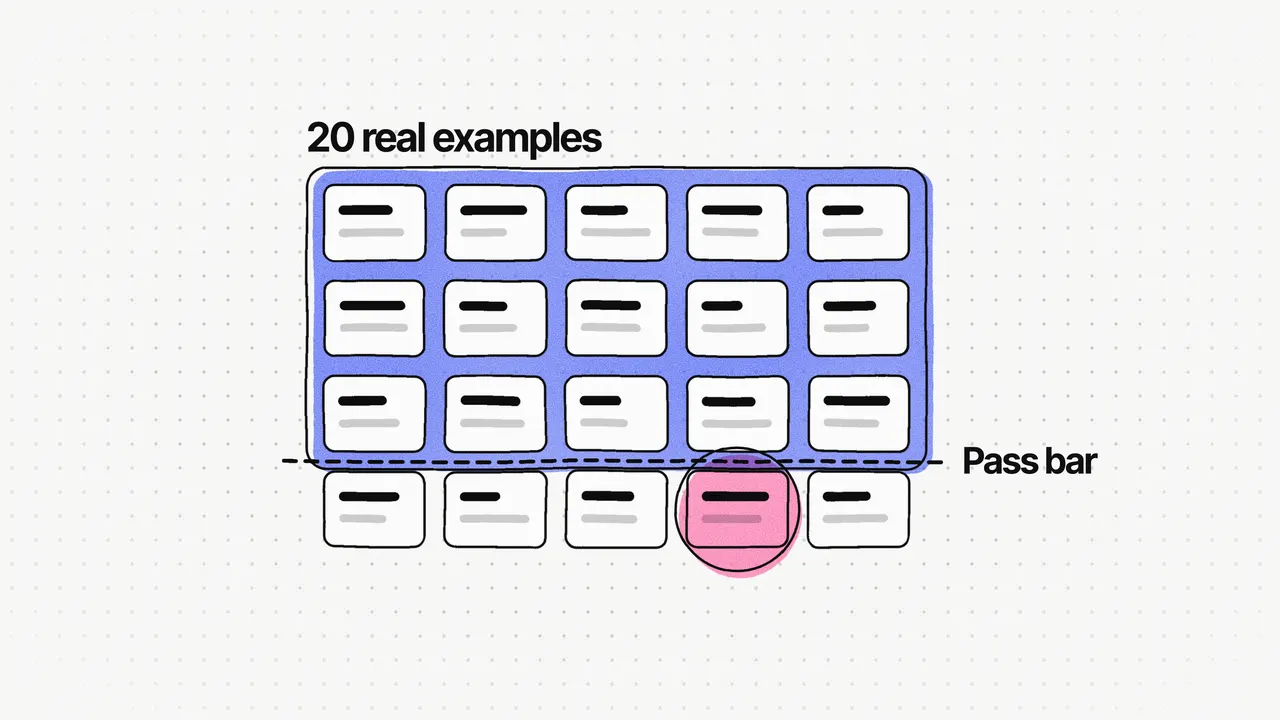
- Do you have real examples to test it on?
- Does the cost per task fit your price?
If any answer is no, ship without AI first and add it later. That's not a judgment on AI. It's the order that gets a product into users' hands soonest with the fewest surprises.
I've led three products where AI does real work, LeanDeck, SportsOnTV and Varsee, and others where the core is rules that have to be exact. Here's each question with what a yes looked like.
1. Does it save real time on a task people do often?
This is the question that decides whether anyone will pay for the AI.
On LeanDeck, the AI proposal, agreement and invoicing tool, the user interviews I ran found that a proposal took agencies 6 to 10 hours, mostly written by hand from scratch. Agencies write proposals all the time. In LeanDeck, a proposal or agreement now takes about 5 minutes. That's a clear yes.
On SportsOnTV, a 24/7 sports channel and news hub covering 32 sports, AI writes the sports summaries. Keeping 32 sports supplied with fresh written content is constant, repetitive work. Another clear yes.
A weak yes sounds like "it would be nice if it suggested things". If you can't name the task and how long it takes today, the AI is decoration.
2. Can a person check the output quickly?
AI makes mistakes, so someone has to be able to spot them fast.
LeanDeck returns proposals as structured, editable sections. An agency can read a section, accept it, edit it or replace it without losing anything else. Checking one section takes a minute; checking one long block of text takes much longer.
Varsee is an AI live-shopping platform that connects online shoppers with a store's own salespeople over live video. The AI reads the shopper's intent, suggests products and coaches the salesperson. We kept the AI beside the salesperson instead of building an AI shopping bot, so a person stays in the conversation and decides what to show.
3. Is a wrong answer cheap to fix?
A wrong word in a draft costs a few seconds. A wrong amount on an invoice costs trust.
That's why LeanDeck's AI drafts proposals and agreements, and invoicing follows fixed rules. A plausible-but-wrong invoice is worse than a slower one. I wrote about where that line sits in Where the AI acts in LeanDeck.
Varsee's reason for existing is a good reminder of what's at stake when a person is in the loop. The idea came from a store owner who showed products over FaceTime and, by the owner's own count, converted over 80% of those shoppers, against 2 to 3% on the website. The value was in the human conversation, so the AI's job was to support it.
4. Do you have real examples to test it on?
If you can't collect 20 real inputs and say what a good answer looks like for each, you can't tell whether the AI is good enough. You'll be judging it on demos.
On LeanDeck I judged AI output case by case at first, and my lesson was to build the AI test set on day one. I explain the method in Test your AI feature with 20 real examples. On Varsee, the lesson was to test the AI before every screen.
No examples yet isn't a dead end. It usually means the first release should do the job by hand or with simple rules, and collect the examples as it goes.
5. Does the cost per task fit your price?
Every AI task costs you model fees, and sometimes review time. Your price has to cover your heaviest realistic users, which averages hide. The formula and a worked example are in AI cost per task.
SportsOnTV launched with a review step: AI summaries went to a review panel first, and the client's team reviewed and published each one. After the AI was tuned on their feedback, they told us they no longer needed to check each summary. Review time like that is a real cost at launch, and it's worth planning how it shrinks.
Which products were right to launch without AI?
Two of the products I lead are good examples of the other answer.
Find Your Calm, a booking platform for wellness operators, is built on booking and pricing rules: schedules per location, prices per slot, and booking software priced by the revenue each operator manages. Those jobs have one right answer each, so fixed rules are the right tool. The big win came from design instead: cutting the booking flow from 9 steps to 4 lifted booking completion by 31%.
KpiClock, a team management product that replaces three tools, shipped time tracking first, because it's the tool teams open every hour. Time tracking has to be exact and dependable. It's live with 900+ companies and 25,000+ users.
| Product | Core job | Right tool for the first release |
|---|---|---|
| LeanDeck | Drafting proposals and agreements | AI, with editable sections and invoicing on fixed rules |
| SportsOnTV | Fresh summaries across 32 sports | AI, with a review panel at launch |
| Varsee | Helping salespeople sell over live video | AI beside the salesperson |
| Find Your Calm | Booking and pricing | Fixed rules, and a shorter flow |
| KpiClock | Time tracking | Fixed rules, built completely first |
What should you do if the answer is no?
Launch without AI and design for it later. Get the product working, learn which task takes people the longest, and collect real examples while they use it. When you come back to AI, you'll be answering the five questions with evidence. The full build process is in How to build an AI MVP.
Answering these five questions with you is how my AI MVP blueprint sprint starts: we decide where the AI acts and what stays on fixed rules, then build the test set and work out the cost per task before anything is built.
Frequently asked questions
Should every MVP use AI?
No. Use it where it saves real time on a frequent task and a person can check the result quickly. Where the job has one exact answer, such as a booking, a price or an invoice, fixed rules are usually the better tool.
What is a good first AI feature?
One that drafts something people currently write by hand, that they can check and edit in a minute or two. In LeanDeck that was proposals and agreements, which took agencies 6 to 10 hours by hand and take about 5 minutes in LeanDeck.
Can you add AI after launch?
Yes, and it's often the better order. Launch the product people need, learn what they do every day, then add AI to the task that takes them longest. You'll have real examples to test it on by then.
What if only some of the five answers are yes?
Treat each no as work to do before AI goes in. Collect examples, add a review step, narrow the job or work out the cost per task. If you can't turn every answer into a yes, ship the first release without AI.