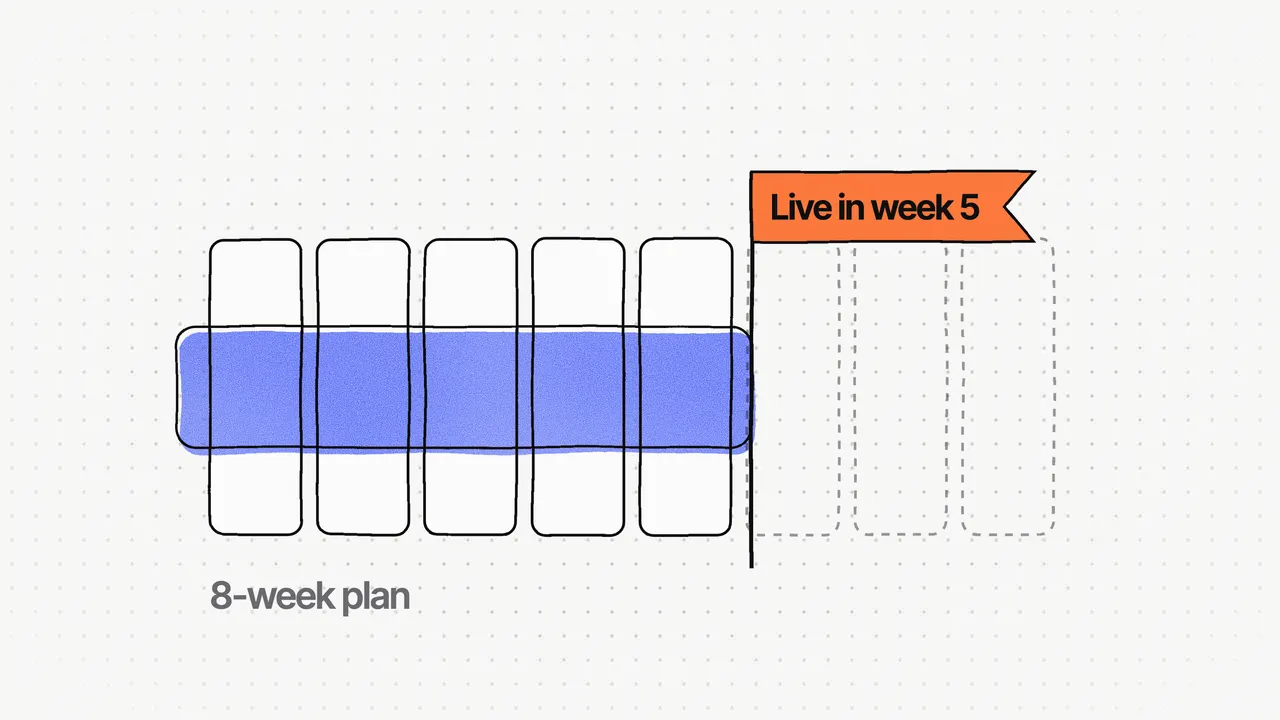
SportsOnTV.tv is a 24/7 live sports channel and sports news hub covering 32 sports, built for a Bangkok-based sports broadcaster. We planned it for eight weeks, and it went live in five. The main reason: we used proven tools for everything that wasn't the product's core, and built only what had to be ours.
Here are the three decisions behind that, and what each one cost.
The brief
The broadcaster needed a site that looks established from day one. It had to carry a 24/7 live channel and fresh news across 32 sports, with no editorial team. And the client wanted to run it himself after launch.
I was the Product Manager and Lead Product Designer. I set the content and integration architecture and led design and delivery, working with the Boomdevs design and development team. We kicked off on 16 October 2025 against an eight-week plan. The site is live at sportsontv.tv.
Use existing tools for the channel and listings
A 24/7 channel, live listings and video, on a five-week clock, is a lot to build from scratch. So we didn't. The channel runs on an existing stream with its TV programme guide, plus YouTube live and playlists, and a third-party TV-listings widget.
The homepage leads with the 24/7 live player and the channel's programme schedule, so the channel is the first thing a visitor sees.
I said no to custom streaming infrastructure. The cost is a dependence on outside providers. What it bought: the site went live in five weeks, on tools that already work.
We used proven tools for everything that wasn't the product's core, and built only what had to be ours.
Build what has to be original
Content was the harder problem. The site needs fresh content every day across 32 sports, and there are no editors. The obvious shortcut was to import third-party feeds as posts, but that would have created duplicate content at scale: 200K+ posts in three months.
So we split the content in two:
- AI-written sports summaries are stored and indexed. These are the site's own content, and they build its search presence.
- Third-party video and news feeds are displayed but not stored, and they open in pop-ups so viewers stay on the site.
I said no to importing every feed item as a post. The trade-off: the feeds add freshness but no search value, and the AI summaries need prompt tuning. It was worth it, because the original summaries build search presence while the feeds keep the site current.
One template for 20 sports pages
The client wanted to manage the site himself after launch. That ruled out a custom-coded theme that only developers can change.
Instead, the site uses a visual page builder and one master sport-page template. Twenty sports pages are built from it, and they differ only by their banner. Every sports page carries the same parts: live games, AI summaries and video. We handed over with training and video walkthroughs.
The cost is less design freedom than custom code. What it bought: the client adds and updates sports pages without us.
After launch
The site went live in five weeks against the eight-week plan, with a 24/7 live channel, sports news across 32 sports and 20 sports pages from one template. The client manages it on his own.
After launch, the client wanted the AI sports news to read better. We improved the AI summarisation, both the prompts and the output, based on that feedback. Better summaries are what bring visitors back and build search traffic.
What I'd do differently: set traffic goals at kickoff. Success was defined as "looks established" and "the client can run it himself", and both were met. I'd also agree measurable targets at kickoff, such as sessions, time on site and returning visitors, so the next round of work is driven by data.