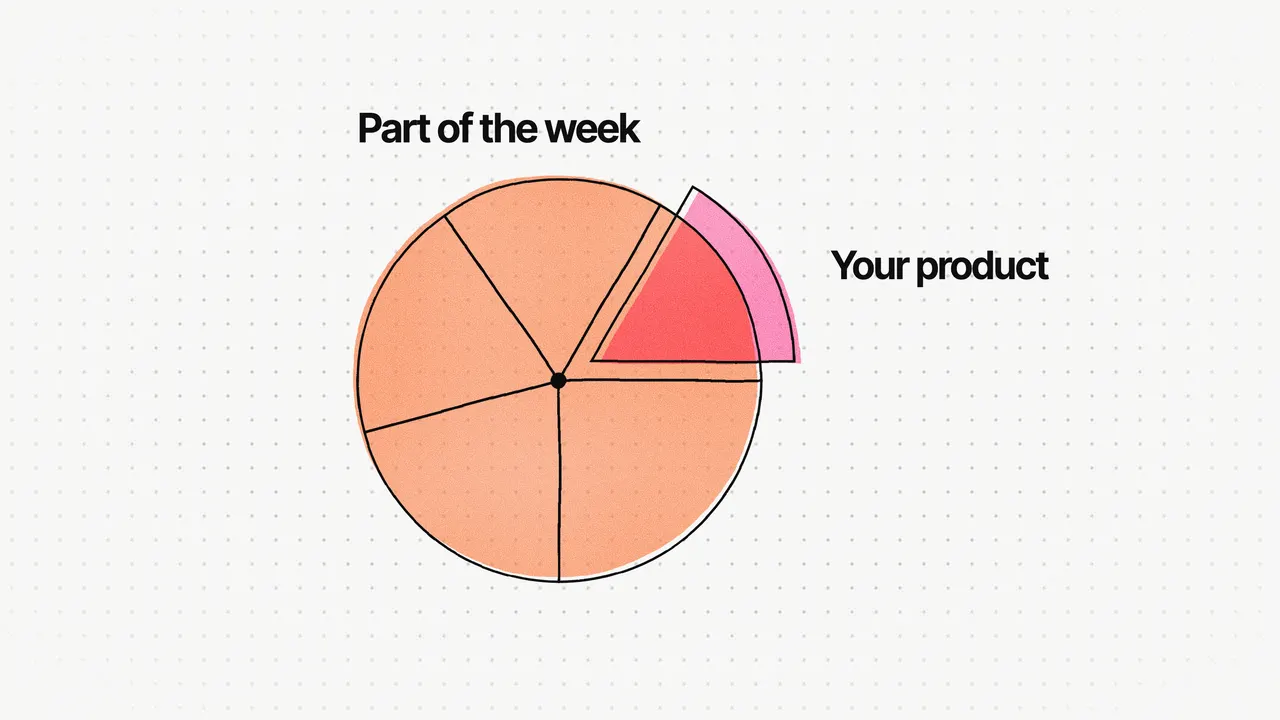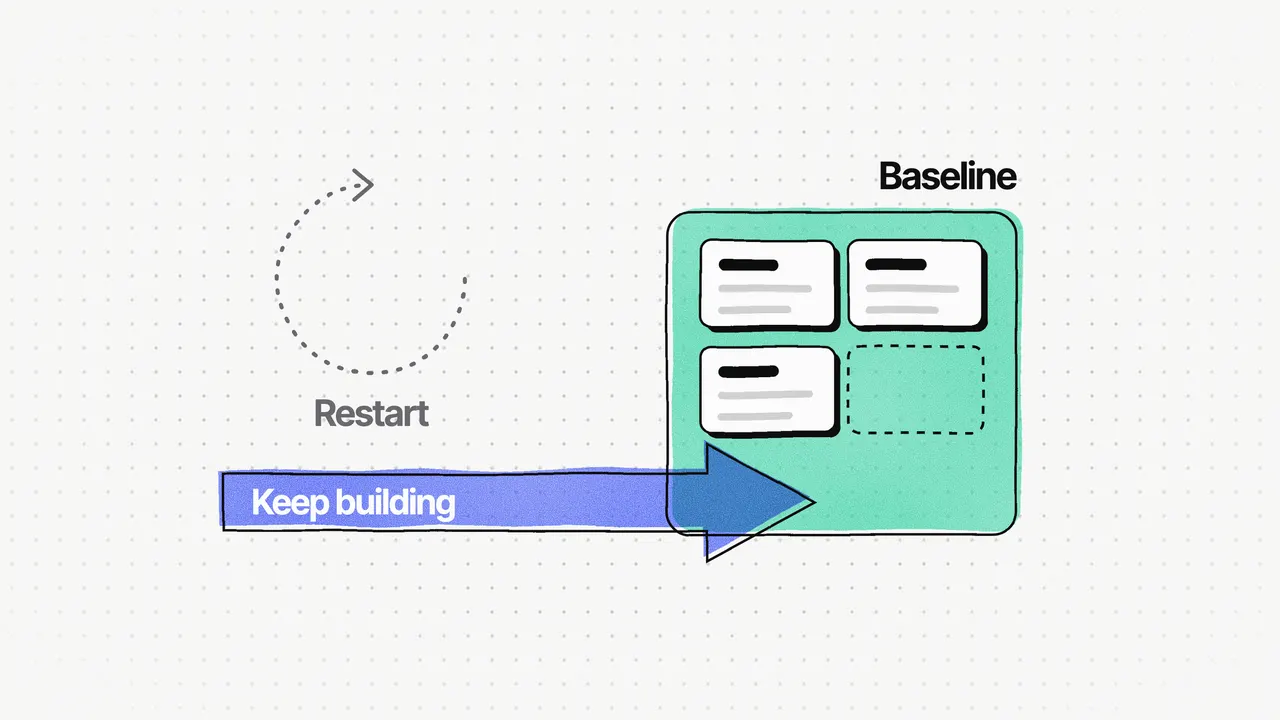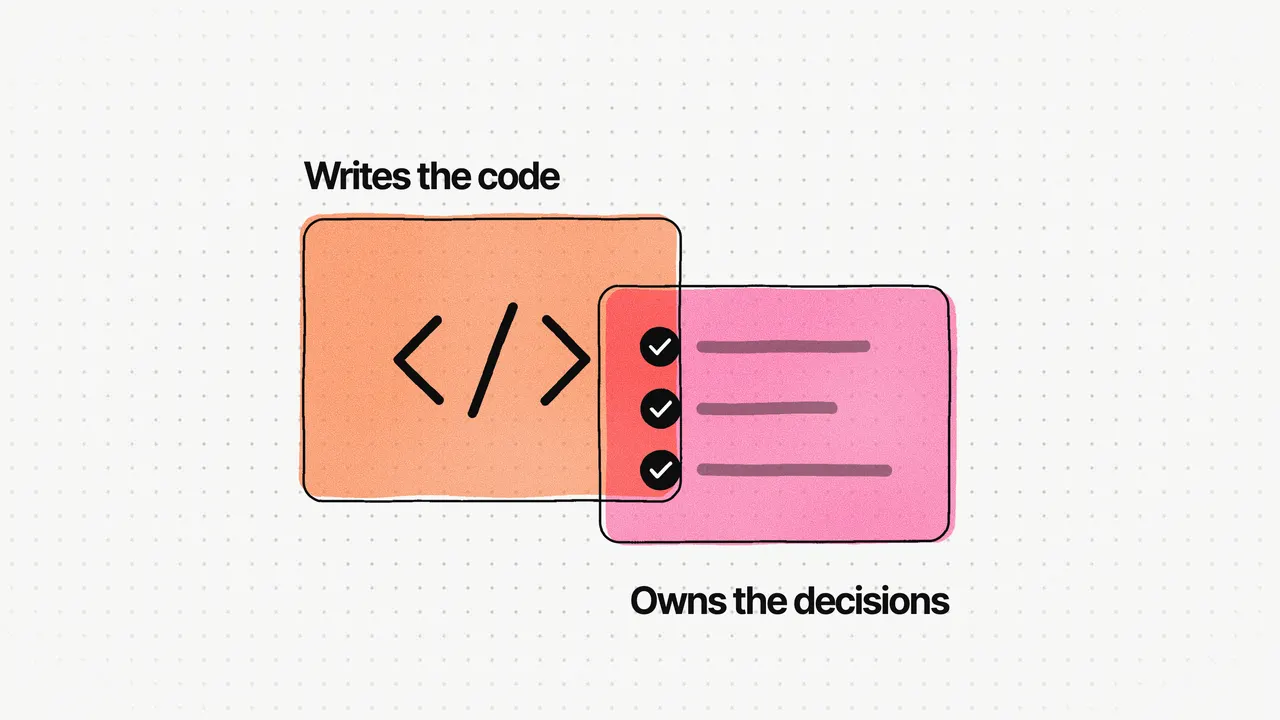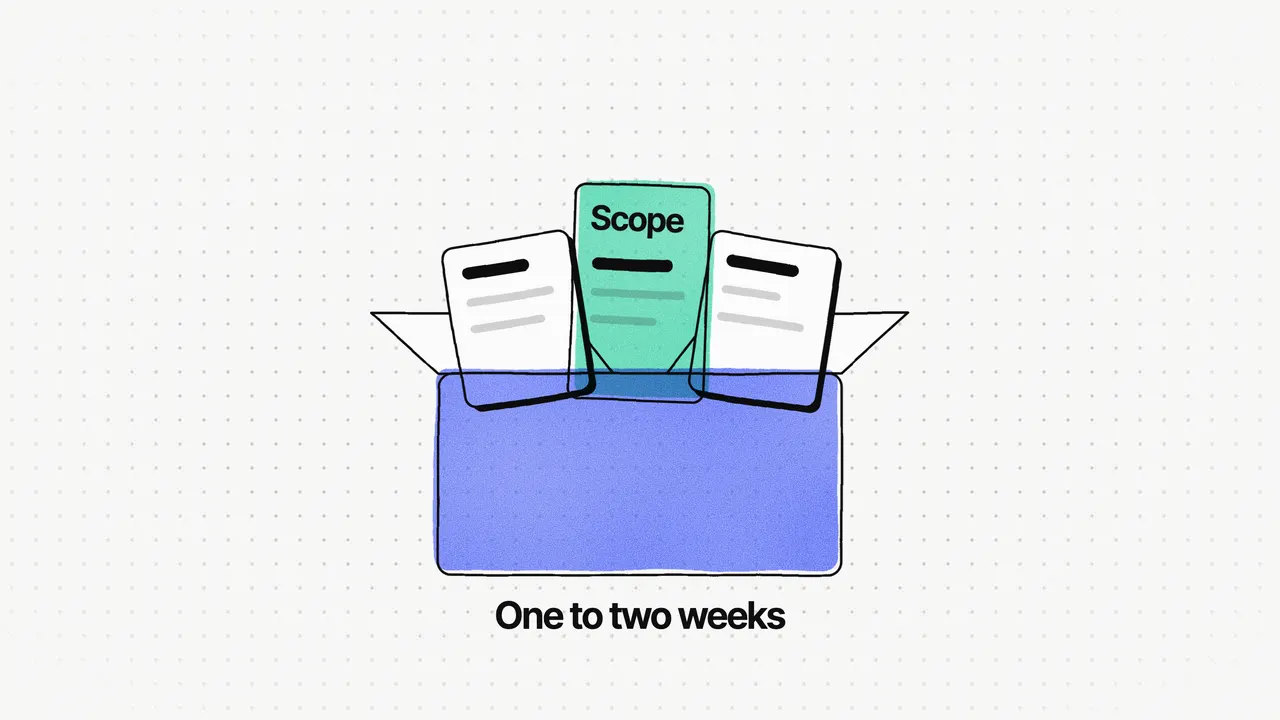

A discovery sprint usually takes one to two weeks, and it should end with six things your developers can build from:
- a written scope: what's in the first release and what waits
- user flows
- a clickable prototype of the key screens
- the business rules and requirements developers build from (the PRD)
- a build plan with a timeline and a budget range
- the risks and decisions that are still open
If any of them is missing, ask why before you pay for the build. Here's what good looks like for each one, what not to pay for, and what to ask before you hire someone to run it.
What is discovery for?
Deciding before you pay to build. Every decision made in discovery is a decision your developers don't have to guess at, argue about or rebuild later.
It's the second step in how I run projects: an intro call, then discovery and scope, then design, build and launch, and the work after launch. Discovery is where the product stops being an idea and becomes a plan that someone else can price and build. I wrote about the research side of it in Product discovery for startups. This post is about what you should hold in your hands at the end.
What are the six deliverables, and what does good look like?
| Deliverable | What good looks like |
|---|---|
| Written scope | A short list of what's in the first release, and a separate list of what waits until after launch |
| User flows | Every main path from start to finish, including what happens when something goes wrong |
| Clickable prototype | The key screens, linked so you can click through the main flows and test them with users |
| Business rules and requirements | Plain sentences developers can build from and test against: who can do what, and what happens in each case |
| Build plan | The order of work, a timeline and a budget range, with the assumptions written next to them |
| Open risks and decisions | What isn't decided yet, who decides it, and by when |
A written scope
The scope is the most important page. It names the first release's job and lists what's in and what waits. On Mark Andrews Creative, the launch included the core commerce, subscription and learning features and the core reports; some reports, gift cards and add-ons followed after launch. With that scope, it went live in 12 weeks. How to scope an MVP shows how I write one.
User flows and a clickable prototype
Flows show every path; the prototype makes the important ones real enough to test. This is often where the biggest improvements come from. On Find Your Calm, the old booking took 9 steps and asked for too much. I designed a 4-step flow, and the client approved it before launch. After the new design replaced the old system, booking completion rose by 31%. On a retail point-of-sale system, I built several prototypes with different layouts, picked the best with the client's team, and tested them with users before development.
Business rules and requirements
This is the part developers need most and founders most often skip. Mark Andrews Creative started from a one-sentence brief. There was no documentation and no plan, so I wrote all the requirements, specs, feature definitions and business logic, and the developers built from them. My PRD template has the nine parts I include.
A build plan
A timeline and a budget range, with the assumptions written beside them: who builds it, what gets integrated, what's done when. A range is honest at this stage. A single exact number usually means the assumptions are hidden.
Open risks and decisions
Nothing gets fully decided in two weeks, and that's fine as long as it's written down. On LeanDeck, the two hard problems were known from the start: accurate, consistent AI output every time, and cost and timeline estimates agencies could defend. Naming them early meant we planned the work around them.
What shouldn't you pay for?
Some discovery work looks busy and produces nothing you can build from:
- Workshops with no written output. If nothing is written down afterwards, the decisions live in people's memories, and memories disagree.
- Personas with no decisions behind them. A persona is only useful if it changes what gets built first.
- 60-page documents nobody reads. Developers need rules they can find and test, in as few pages as it takes.
- "Strategy" with no scope. A direction without a list of what's in the first release can't be built or priced.
A simple test for any deliverable: does it change what gets built, or the order it's built in? If not, skip it.
How long should discovery take?
One to two weeks for most MVPs. That's enough time to talk to a handful of users, map the flows, prototype the key screens and write the rules, if someone is making decisions every day.
What matters more than length is that every day ends with something decided. On LeanDeck, the user interviews I ran showed that a proposal took agencies 6 to 10 hours, mostly written by hand from scratch. That one finding decided where the AI would act: drafting proposals and agreements.
If a discovery phase runs past two weeks, ask what's being decided each week. Some products need longer, such as anything handling regulated data or replacing a system people use every day. The answer should still be a list of decisions.
What should you ask before you hire someone for discovery?
- What will I have in my hands at the end? Ask to see an example of each deliverable.
- Who writes the business rules, and in what form?
- Will the prototype be tested with real users before the sprint ends?
- What will the build plan include, and what assumptions will it rest on?
- If I take the results to another team, can they build from them?
That last question matters most. Good discovery output belongs to you and works with any team, which is also what makes quotes comparable. I cover that in Why MVP quotes range from $15k to $80k.
My MVP blueprint sprint is a fixed-scope discovery sprint that hands you all six. If your product has AI in it, the AI MVP blueprint sprint adds where the AI acts, a 20-example test set and the cost per AI task.
Frequently asked questions
What are the deliverables of a discovery sprint?
A written scope of the first release, user flows, a clickable prototype of the key screens, the business rules and requirements developers build from, a build plan with a timeline and budget range, and a list of the risks and decisions still open.
How long should a product discovery phase take?
One to two weeks for most MVPs. If it runs longer, ask what's being decided each week. Each week should end with decisions written down.
Is a discovery sprint worth paying for?
Yes, when it ends in documents your developers can build from. It's the cheapest moment to change your mind, and it makes build quotes comparable because every team prices the same scope.
What shouldn't a discovery sprint include?
Workshops with no written output, personas with no decisions behind them, long documents nobody will read, and strategy with no scope. If a deliverable doesn't change what gets built, you don't need it.