Find Your Calm is booking software for wellness operators, such as sauna businesses, and it is live with 17 UK operators. I designed its pricing model, and the client approved it. It has two parts.
Two tiers, two jobs
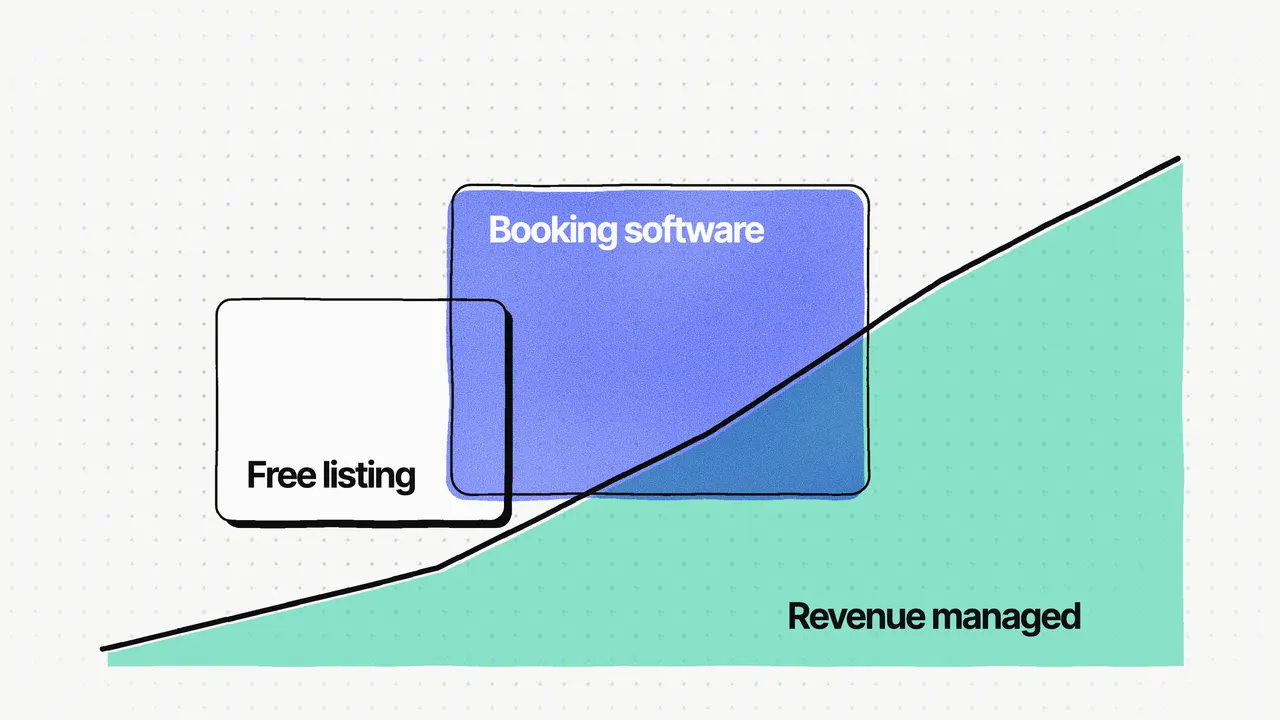
A free marketplace listing. Any operator can be listed on the Find Your Calm marketplace for free. The free tier isn't a trial. It's how operators find the platform in the first place. Its job is to bring operators in.
Paid booking software. Operators who run their business on Find Your Calm (bookings, locations, pricing and schedules) pay for the software.
Priced by the revenue an operator manages
The usual ways to price software like this are per seat or per location. Both work against a wellness operator.
- Per seat charges the operator for every staff member who logs in, which pushes them to share logins to save money.
- Per location charges the operator for growing. Opening a second site is exactly what we want operators to do.
Pricing by the revenue each operator manages through the software ties what they pay to the value they get from it. A small operator pays less; a larger one pays more, because the software is running more of their business.
No commission on bookings
Find Your Calm takes no transaction commission. Operators take payments through their own payment accounts, so the money never passes through the platform, and there is nothing to take a cut from.
That costs Find Your Calm a revenue stream many booking platforms rely on. It also means operators never lose a share of every booking.
What I'd watch
Revenue-based pricing only works if operators trust how revenue is counted. The rule has to be simple, visible, and the same for everyone. If it ever feels like a hidden commission, it becomes one in their eyes.